Kenya turns to China for $1.5 billion highway following U.S. funding setback
Kenya is moving forward with a $1.5 billion highway expansion, marking a significant U-turn in Chinese financing for critical East African infrastructure.
 admin
admin
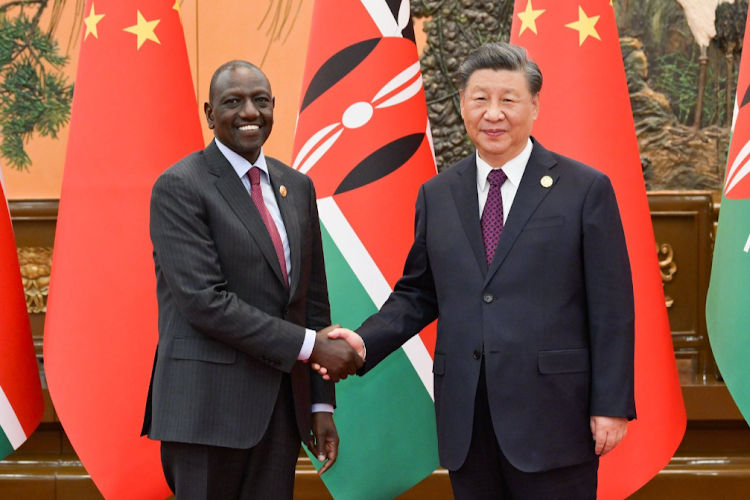

Kenya is moving forward with a $1.5 billion highway expansion, marking a significant U-turn in Chinese financing for critical East African infrastructure.
- Kenya collaborates with two Chinese firms to launch a $1.5 billion highway expansion project to enhance strategic transport corridors.
- The initiative improves connectivity from Mombasa to western Kenya and neighboring countries, replacing a scrapped U.S.-backed transit plan.
- Kenya's partnership with China follows a foreign-aid review impacting prior projects, marking China's renewed infrastructure engagement in Africa.
- The project, involving a two-phase execution, is financed through a debt-equity model, addressing public borrowing concerns.
Kenya is pivoting further toward Chinese financing for its infrastructure plans with the launch of a $1.5 billion highway expansion on Friday, deepening Beijing’s footprint in one of East Africa’s most strategic transport corridors after years of muted engagement.
The project will be executed in two phases and financed through a mix of debt and equity, a structure that is gaining favour as African governments face growing pressure to rein in public borrowing. "We don't have any room to borrow any more money," Kefa Seda, director general of the Public-Private Partnerships directorate at Kenya's finance ministry told Reuters ahead of the official launch ceremony.
The upgraded highway will improve a key transport corridor linking the port of Mombasa to Kenya’s western region and landlocked neighbours such as Uganda, via Nairobi.
U.S.-Backed Transit Plan Collapse
The new project follows the collapse of the Nairobi Bus Rapid Transit (BRT) deal, originally valued at $60 million and backed by the United States through the Millennium Challenge Corporation.
The agreement was signed in September 2023 during President William Ruto’s visit to New York and activated in May 2024 after a White House meeting with former President Biden.
Subsequently, the project was placed in jeopardy after the Trump administration cancelled the MCC Threshold Program as part of a foreign-aid review, even though Kenya had been designated a Major US Non-NATO Ally (MNNA) in June 2024.
The countrys's Treasury confirmed receipt of a termination notice, leaving the legally binding project in limbo. In response, the government has increasingly sought technical and financial support from China and the United Arab Emirates for major infrastructure initiatives.
China Repositions in Africa
China’s return represents a U-turn from its previous retrenchment. Beijing had scaled back lending to Africa around 2019 amid rising debt sustainability concerns, which stalled several flagship projects.
Notably, the railway linking Mombasa to Uganda and South Sudan under the Belt and Road Initiative was halted in 2019 in the Rift Valley, roughly 468 kilometres (290 miles) short of the Ugandan border, after Chinese support was withdrawn.
In 2024, China pledged $50 billion in credit and investment over three years at a summit with African leaders, signaling renewed engagement and a recalibrated strategy for the continent.
Financing Model and Project Structure
Under the first phase of the project, China Road and Bridge Corporation will partner with Kenya’s state pension fund, the National Social Security Fund, to expand two stretches of a 139-kilometre single-lane highway into four- and six-lane dual carriageways at a cost of $863 million, according to the Kenya National Highways Authority.
In the second phase, Shandong Hi-Speed Road and Bridge International, a subsidiary of China’s Shandong Hi-Speed Group, will upgrade a 94-kilometre single-lane section into a six-lane carriageway for $678.56 million. Both cost estimates include financing costs.
Each phase will be funded with 75% debt and 25% equity, with NSSF contributing 45% of the equity in its phase. The borrowing is expected to come from Chinese commercial lenders and state-backed institutions such as the Export-Import Bank of China, Seda said.
Construction is expected to be completed by the end of 2027, after which the operators will run the highway under a 28-year toll concession to recover their investment and earn returns