Lavish Gifts and Trillion-Dollar Deals: Gulf States' Contradictions Amidst Palestinian Struggles
An in-depth analysis of the Gulf states' recent gifts and massive investment commitments to President Trump amidst ongoing U.S. support for Israel, exploring the implications for Palestinian solidarity.
 admin
admin
Introduction
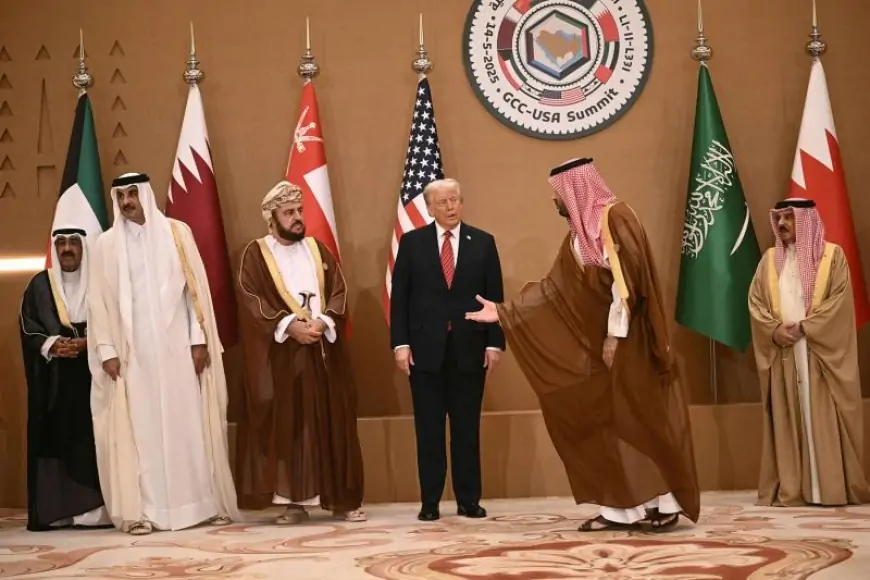
In a world where political alliances often overshadow ethical considerations, recent events have highlighted a stark contradiction. As Palestinians endure ongoing hardships, Gulf nations, notably Qatar, Saudi Arabia, and the United Arab Emirates (UAE), have extended lavish gifts and pledged massive investments to U.S. President Donald Trump, a leader whose administration continues to provide substantial support to Israel. This juxtaposition raises pressing questions about the true nature of these alliances and the principles they uphold.
The Controversial Boeing 747 Gift
Qatar's offer of a $400 million Boeing 747-8 jumbo jet to President Trump has sparked widespread debate. Qatari Prime Minister Sheikh Mohammed bin Abdulrahman Al Thani defended the gesture, likening it to historical gifts between allies, such as the Statue of Liberty. He emphasized that the offer was a routine exchange between allied nations, dismissing suggestions of ulterior motives.
However, critics argue that such a gift, especially amidst the ongoing Israeli-Palestinian conflict, sends a conflicting message. While Qatar positions itself as a mediator and supporter of Palestinian rights, this gesture towards a leader backing Israel's military actions raises concerns about the consistency of its foreign policy.
Trillion-Dollar Investment Commitments
During President Trump's recent Middle East tour, Gulf states announced substantial investment commitments to the United States:
-
Saudi Arabia: Pledged $600 billion in U.S. investments over the next four years, with potential increases up to $1 trillion, encompassing defense deals, artificial intelligence initiatives, and capital investments.
-
United Arab Emirates: Announced plans to invest $1.4 trillion in the U.S. economy over the next decade, focusing on AI infrastructure, semiconductors, energy, quantum computing, biotechnology, and manufacturing.
-
Qatar: Signed agreements expected to result in at least $1.2 trillion in economic exchange, including a $96 billion sale to Qatar Airways.
These massive investments, while beneficial to the U.S. economy, raise questions about the Gulf states' commitment to the Palestinian cause, given the U.S. administration's unwavering support for Israel.
U.S. Military Aid to Israel
The United States has long been a significant supporter of Israel, providing substantial military aid. As of recent reports, the U.S. has approved nearly $12 billion in major Foreign Military Sales (FMS) to Israel, including advanced weaponry and defense systems.
Critics argue that such aid contributes to the perpetuation of violence against Palestinians, particularly in Gaza, where military operations have resulted in significant civilian casualties and humanitarian crises.
Gulf States' Diplomatic Balancing Act
The actions of Gulf states in extending lavish gifts and massive investments to U.S. leaders while expressing solidarity with Palestinians highlight a complex diplomatic balancing act. On one hand, these nations seek to maintain strong ties with powerful allies like the United States; on the other, they face domestic and regional expectations to support the Palestinian cause.
This duality raises questions about the authenticity of their commitments and the potential influence of geopolitical interests over ideological alignments.
Religious and Ethical Considerations
From an Islamic perspective, the Quran cautions against forming alliances that compromise core values and principles. Verses such as Surah Al-Mumtahanah (60:1) warn believers against taking enemies of Allah and the believers as allies:
"O you who have believed, do not take My enemies and your enemies as allies, extending to them affection while they have disbelieved in what came to you of the truth..."
Furthermore, Surah Al-Baqarah (2:11-12) speaks of those who spread corruption under the guise of peacemaking:
"And when it is said to them, 'Do not cause corruption on the earth,' they say, 'We are but reformers.' Unquestionably, it is they who are the corrupters, but they perceive [it] not."
These teachings prompt introspection among Muslim-majority nations regarding their foreign policy decisions and the ethical implications of their alliances.
The recent interactions between Gulf states and President Trump, set against the backdrop of ongoing U.S. support for Israel, underscore the complexities of international diplomacy in the Middle East. As Palestinians continue to face adversity, the actions of neighboring nations warrant critical examination to ensure that solidarity is not overshadowed by strategic interests.