Africa’s Liberation from Neocolonial Injustice: Chihombori-Quao’s Bold Call for Change
Discover Arikana Chihombori-Quao’s compelling critique of USAID and Western exploitation in Africa. Learn how decades of social injustices have hindered African progress and why self-reliance is essential for the continent’s future.
 admin
admin
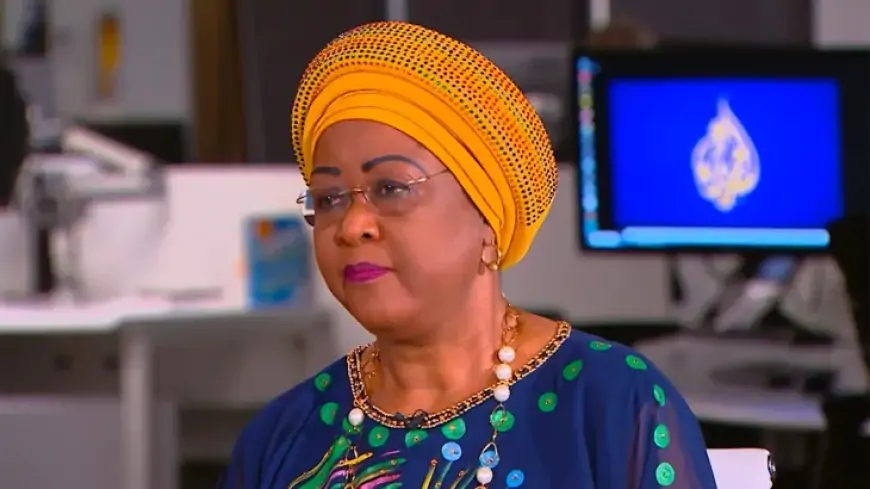
In a recent discussion on Al Jazeera, former African Union ambassador Arikana Chihombori-Quao delivered a scathing critique of the United States Agency for International Development (USAID) and broader Western interventions in Africa. Far from being a tragedy, she argues that the dismantling of USAID under President Trump’s administration offers Africa an opportunity to reclaim its destiny—a moment to celebrate the end of external meddling that has long hindered the continent’s self-determination.
The Hidden Agenda Behind Western “Aid”
Chihombori-Quao contends that USAID, along with similar international agencies from Europe and other Western countries, has not genuinely contributed to Africa’s development. Despite decades of involvement in education and healthcare projects, she notes that the tangible benefits have been minimal. Instead, these programs often served as instruments for destabilizing governments and promoting agendas that suit the geopolitical and economic interests of foreign powers. According to Chihombori-Quao, the guise of humanitarian assistance and environmental, human rights, or social justice initiatives frequently masks a more sinister agenda—one aimed at maintaining control over African resources and political landscapes.
A History of Exploitation and Undermining Sovereignty
Throughout her discussion, Chihombori-Quao highlighted how external aid has historically been used as a tool of exploitation. She emphasized that while Africa has been the provider of critical resources for the recovery of European nations—citing, for example, the massive contribution of African minerals during the Marshall Plan era—this same generosity has not translated into reciprocal development for the continent. Instead, the relentless flow of aid has often reinforced a dependency that undermines local leadership and economic autonomy. “It takes two to tango,” she remarked, urging African leaders to stop pleading for assistance from powers that have shown little genuine interest in Africa’s progress.
Social Injustices and the Call for Self-Reliance
At the heart of Chihombori-Quao’s argument is a call to action for African governments and citizens. She challenges the prevailing narrative that external aid is indispensable by pointing out that most aid initiatives have failed to create sustainable improvements in education, healthcare, or infrastructure. Instead, these initiatives have often destabilized governments and impeded the development of robust, self-sustaining institutions. By exposing the ulterior motives behind many aid programs, she posits that Africa must pivot towards a model of self-reliance—one in which its abundant natural and human resources are harnessed for the benefit of its people, not exploited by external forces.
The Path Forward for Africa
Chihombori-Quao’s message is clear: Africa does not need to continue being a playground for external powers seeking to profit from its resources. The recent scaling back of USAID and other similar agencies should serve as a wake-up call for African leaders. Rather than relying on aid, she insists that Africa must look inward and invest in its own potential. This means taking control of its natural resources, fostering local innovation, and building resilient systems that prioritize the welfare of its citizens.
She also criticizes the role of international institutions—like the United Nations, the World Health Organization, and the World Trade Organization—arguing that many of these bodies were established not to support the developing world but to serve the interests of Western powers. As these institutions face growing criticism and calls for reform, Africa has an unprecedented opportunity to redefine its relationships with the global community on its own terms.
A Call for Pan-African Unity
Ultimately, Chihombori-Quao’s discourse is a rallying cry for Pan-African unity. The dismantling of these external aid structures, she argues, opens the door for Africa to assert its sovereignty and embrace a future defined by self-determination. African leaders and citizens alike must seize this moment to reject the paternalistic approaches of the past and work towards a future where Africa’s destiny is shaped by its own vision and capabilities.
In this pivotal moment, the liberation from neocolonial interference is not just a possibility—it is an imperative. By uniting and leveraging its collective resources, Africa can emerge as a powerful force on the global stage, free from the chains of exploitation and driven by the spirit of true self-reliance.