Inside Africa’s thrift boom: Top second-hand clothing importers and the multi-million dollar economy
Africa's love affair with thrift fashion is no longer a side story in the global clothing trade; it has become serious business.
 admin
admin
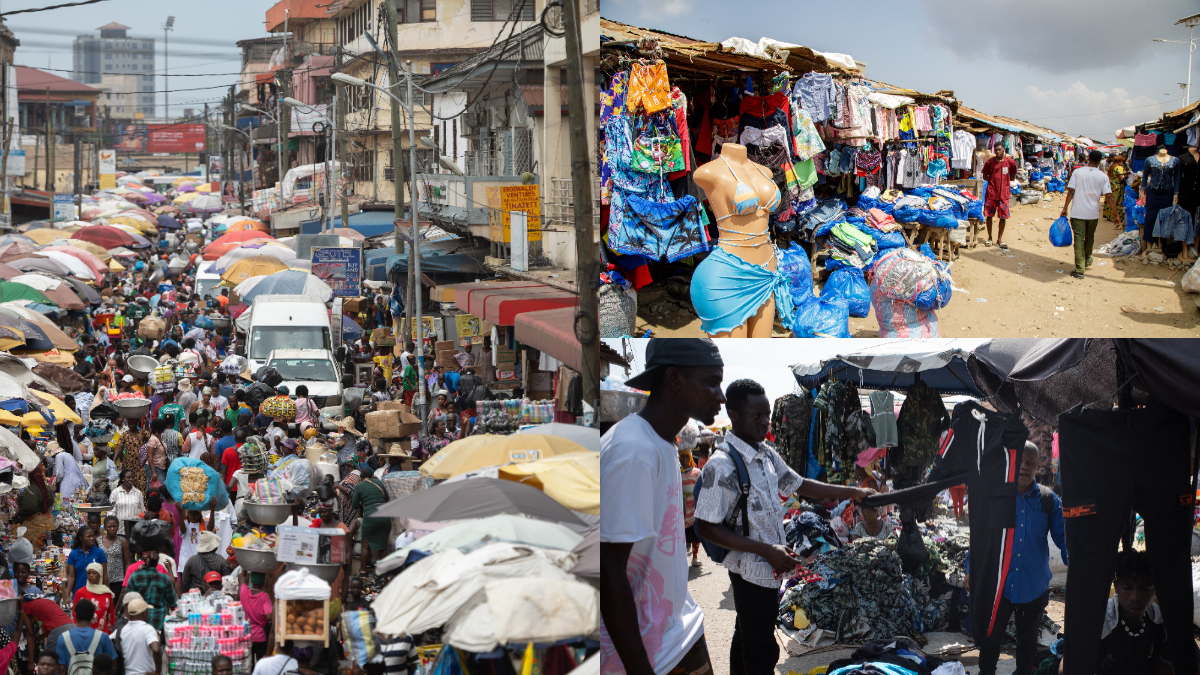
![African second-hand clothing markets are booming in 2025 as Kenya, Ghana, South Africa, Uganda and Nigeria import hundreds of millions of dollars worth of thrift garments, reshaping the continent’s textile economy. [Abadjaye Justin, Nipah Dennis/AFP, and Ernest Ankomah/Bloomberg and via Getty Images]](https://ocdn.eu/pulscms/MDA_/bfb26557ba5e079fa1911d2d3f23eb46.jpg)
Africa's love affair with thrift fashion is no longer a side story in the global clothing trade; it has become serious business.
- Africa’s thrift fashion economy has grown into a multi-million-dollar market driven by rising demand for affordable clothing and strong informal sector activity.
- New import data shows Kenya at the top, with nearly $300 million in second-hand clothing inflows, ahead of Ghana, South Africa, Uganda, and Nigeria.
- The booming mitumba trade supports millions of jobs but deepens tensions with local textile industries struggling to compete.
- Analysts warn that waste volumes, smuggling, and stalled industrialisation remain major challenges for African governments seeking long-term solutions.
From Nairobi's Gikomba to Accra's Kantamanto, to Lagos's Katangua, bales of second-hand clothes power a fast-growing retail ecosystem worth hundreds of millions of dollars each year, even as they fuel fierce debate over jobs, waste, and industrialisation.
Recent trade data compiled by the Massachusetts Institute of Technology (MIT) shows that Kenya has overtaken Nigeria to become Africa's largest importer of second-hand clothes.
In 2023, Kenya brought in used clothing and textiles worth about Sh38.5 billion, equivalent to roughly $298 million, making it the continent's top mitumba market.
Using the current average 2025 exchange rate of roughly 1 Kenyan shilling to 0.0077 dollars, the Sh38.5 billion figure still comes to around $298 million, underlining just how large the trade has become.
A billion-dollar trade powered by affordability and informal sector jobs
![Citizens shop at Gikomba, one of the main market place selling second-hand clothes, as citizens with low income show interest to the market place in Nairobi, Kenya on September 21, 2023. Kenya imports about 100 thousand tones second-hand clothes annually, generating income for the country and providing employment for tens of thousands of people. [Photo by Gerald Anderson/Anadolu Agency via Getty Images]](https://ocdn.eu/pulscms/MDA_/7896dcbd22ffba4c89c8cdaf58575851.jpg)
Behind Kenya, MIT’s data places Ghana, South Africa, Uganda, and Nigeria as the other heavyweights of the African second-hand clothing market.
In 2023, Ghana imported about Sh30.4 billion worth of used garments, which works out to approximately $ 235 million.
South Africa followed at Sh29.4 billion, around $227 million; Uganda at Sh27.2 billion, about $210 million; and Nigeria at Sh27 billion, roughly $209 million, despite an official ban on used-clothes imports.
Taken together, these five markets alone account for close to $1.2 billion in annual second-hand clothing imports, a conservative estimate that does not fully capture the large volumes moving through informal and smuggling routes.
For traders, transporters, customs agencies, and small retailers, thrift has become a critical source of cash and employment.
In Kenya, the numbers are particularly striking as the trade supports around two million livelihoods, from porters and brokers to stall owners and tailors, according to estimates cited in Kenyan and international reporting.
The growing stats
![People shop at the second-hand clothes section of Gikomba Market in Nairobi, on September 29, 2023. Gikomba is the largest open-air market in Kenya and one of the largest second-hand clothes markets in East Africa. [Photo by SIMON MAINA/AFP via Getty Images]](https://ocdn.eu/pulscms/MDA_/0e34a09121b267863c4490fe4fd8259e.jpg)
At Nairobi’s Gikomba market, one of East Africa’s largest second-hand hubs, about 100,000 metric tons of used clothing arrive each year with an import value of roughly $298 million and customs revenue estimated at more than $100 million.
This economic footprint explains why thrift has proven politically and socially resilient. For low and middle-income consumers facing high inflation and stagnant wages, thrift clothing offers brand-name fashion and basic attire at a fraction of the cost of new garments.
For governments, it generates tax receipts and keeps millions engaged in income-earning activities that might otherwise not exist.
Yet the same trade exposes profound structural weaknesses in the African textile and fashion industries. Kenyan manufacturers, for example, warn that the flood of cheap used imports makes it extremely difficult to scale local production, even as the country talks up ambitions to revive its textile value chain under regional industrialisation plans.
![People off load bales of secondhand clothes from a truck at the Kantamanto market in Accra, Ghana, on November 16, 2023. Kantamanto market is vast, spanning over 20 acres in the heart of Accra's business district, its stalls dominated by used clothing and shoes from the West and China. [Photo by NIPAH DENNIS/AFP via Getty Images]](https://ocdn.eu/pulscms/MDA_/c6c9ffb10cdac5483f4c2fc3a4c5d215.jpg)
Ghana faces a similar dilemma as the Kantamanto market in Accra is a world-famous symbol of thrift culture, yet campaigners and city authorities are increasingly worried about the mountains of unsellable clothing that end up clogging drainage channels, beaches, and landfill sites.
Studies and NGO investigations have suggested that a significant share of imported bales arrive in poor condition and are dumped almost immediately, effectively turning parts of Africa into an end-of-life destination for fast fashion.
From a business perspective, the second-hand clothing story is really about margins, logistics, and global inequality. Used garments donated or discarded in the United States, Europe, and Asia are collected at minimal cost, sorted by grade, and then sold in bulk to traders who ship them to African ports.
By the time a bale reaches markets in Kenya, Ghana, or Uganda, the mark-up is significant, but still keeps per-item prices low enough for mass consumption. This price gap between new and used clothing is exactly what squeezes local textile mills and apparel factories.
Smuggling, waste, and policy failures complicate the future of used clothing imports
![L-R: Nigeria's President Bola Tinubu, Kenya's President William Ruto and Ghana's President John Mahama. As Africa negotiates its future under the African Continental Free Trade Area, the thrift economy is likely to remain central to how ordinary people dress and earn a living. [Getty Images]](https://ocdn.eu/pulscms/MDA_/05a5ea41a88e6a14ba8e1343adbae3c3.jpg)
For policymakers, the numbers underline a tough trade-off. Restricting imports could push consumers and retailers towards locally made products and support industrial growth.
In practice, sudden bans or steep tariffs risk destroying millions of informal sector jobs and raising the cost of clothing for poor households.
Nigeria, which officially bans used-clothes imports but still appears among the top five importers by value when smuggling and informal flows are considered, is a prime example of that tension.
As Africa negotiates its future under the African Continental Free Trade Area, the thrift economy is likely to remain central to how ordinary people dress and earn a living.
The financial data show that second-hand clothing is already a multi-hundred-million-dollar industry in individual countries and collectively a billion-dollar business across the continent.
The open question is whether governments and investors can turn this dependence on imported cast-offs into a bridge toward stronger domestic textile industries, or whether mitumba will continue to symbolise a development model where Africa sits at the end of the global fashion value chain, absorbing both its bargains and its waste.